Who should apply?
Curious students and early-career applicants who want to use computational methods on real scientific problems. Previous research experience is welcome, but not essential.
We develop computational pipelines, agentic AI workflows, and no-code scientific tools for research organizations, research institutes, and life science teams working with complex biological and computational data.
From biological data analysis and reproducible computational workflows to specialized research agents that coordinate analysis, evidence, tools, and validation, DataLens.Tools helps research teams build structured computational systems around their scientific questions.
Get in TouchApplications Open
An international programme for students and early-career researchers interested in computational biology, scientific Python, data science and responsible AI-assisted research.
We are interested not only in what applicants already know, but in how they reason, learn and approach unfamiliar scientific problems.
Apply NowCurious students and early-career applicants who want to use computational methods on real scientific problems. Previous research experience is welcome, but not essential.
Scientific curiosity, a willingness to learn and thoughtful problem-solving. Basic Python is helpful, and motivated applicants who are actively learning are encouraged to apply.
Understand unfamiliar research problems, evidence and experimental design.
Apply Python, data analysis and reproducible research practices.
Use LLMs productively while retaining scientific judgement.
Areas may include bioinformatics, cheminformatics, single-cell analysis, scientific Python, data science, AI-assisted research and reproducible workflows. Selected participants receive structured training; strong participants may later be considered for paid projects, internships or Working Student positions, subject to project availability, skills and eligibility.
New Launch
A scientific workflow advisor that helps biology researchers decide which statistical or machine learning approach fits their current experimental dataset.
Built for experimental biology, not generic business tables.
Upload a CSV file and the advisor inspects your dataset structure, detects biological patterns, and recommends a scientifically defensible analysis strategy. It is especially useful for fluorescence data, cell-line assays, imaging-derived features, dose-response experiments, and longitudinal measurements.
Time-series, wide-format tables, repeated measures, batch/plate columns, and measurement readouts.
Flags leakage risks, inappropriate random splitting, small-sample overfitting, and temporal autocorrelation.
Suggests preprocessing, validation, visualization, mixed-effects models, and time-series analysis when needed.
Generate Markdown or JSON summaries for notebooks, lab records, documentation, or project planning.
Computational Research Agents
DataLens.Tools designs computational agents for biology, bioinformatics, neuroscience, chemical ecology, and data-intensive research. These systems can coordinate scientific tasks, inspect structured data, use computational tools, organize evidence, and support reproducible analytical workflows.
We do not treat a research agent as a generic chatbot. Each system is designed around the scientific question, biological data structure, computational environment, validation requirements, and human review points of the organization using it.
Break complex computational research tasks into inspectable, specialist steps.
Check experimental structure, repeated measures, leakage risks, and analysis readiness.
Connect approved scripts, databases, statistical tools, and computational pipelines.
Keep uncertainty, evidence, and approval points visible to researchers.
Conceptual communication visualization. Client systems are developed around specific research workflows, data structures, validation requirements, tool access, and institutional safeguards.
Interactive advisor
Model Match asks a few questions about your samples, target, feature space, biological design, preprocessing, and validation plan. It returns a practical model shortlist with risks to check before trusting the result.
Step 1
Describe the dataset
Step 2
Review model fit
Step 3
Check analysis risks
Expert Review
Is your model performing well or is your validation strategy making it look better than it really is?
DataLens.Tools reviews biological machine-learning workflows for experimental-design, validation, and data-leakage problems that can produce misleading performance estimates.
The audit is intended for biological datasets where small sample sizes, repeated measurements, batches, patients, experimental groups, or high-dimensional features can affect model selection and evaluation.
Review biological units, repeated measurements, batches, groups, and independence assumptions.
Examine train/test structure, preprocessing leakage, feature-selection leakage, and grouped validation.
Review baselines, metrics, hyperparameter tuning, overfitting risks, and validation design.
Assess whether evaluation and reported performance support the intended biological claim and generalization setting.
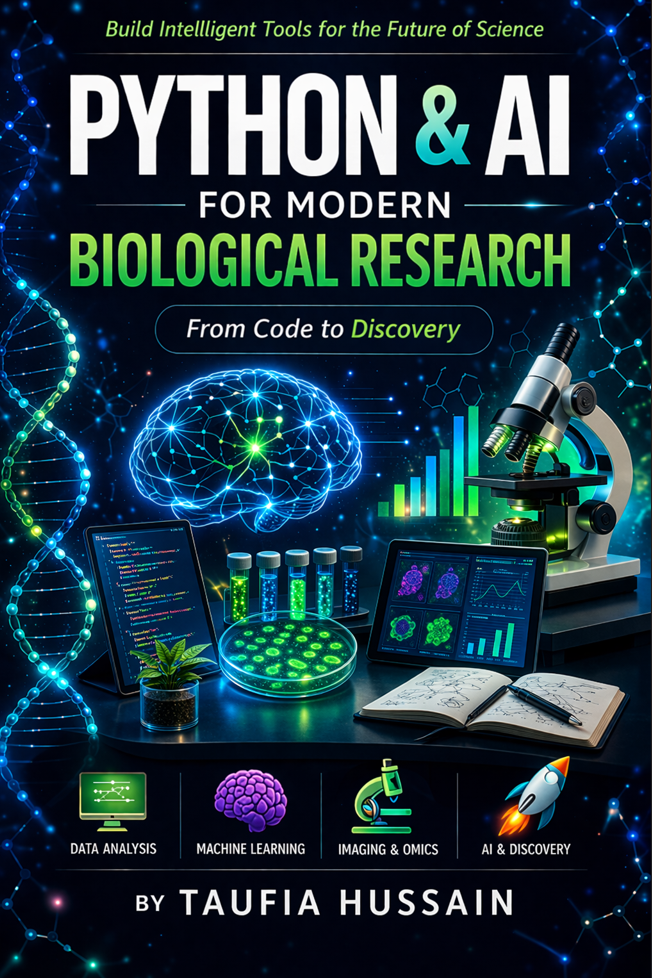
📘 New Digital Book
A practical guide for biologists to learn Python, data analysis, statistics, machine learning, imaging workflows, and AI for modern research.
Designed for students, researchers, and scientists who want a clear, hands-on path into computational biology without getting lost in overly technical material.
Instant access after payment. Secure checkout powered by Stripe.
Need help cleaning, analyzing, or visualizing your research data? Book a 1-on-1 consultation tailored to your project in biology, neuroscience, or imaging.
Learn More & Book NowGet biology-aware recommendations for ML/statistical workflows, validation, preprocessing, and visualization from your CSV dataset.
Open Tool →Correct motion artifacts in fluorescence recordings and improve ΔF/F accuracy before analysis.
Learn More →Analyze and interpret thermal images from FLIR cameras with region statistics and automated reports.
Learn More →Extract and visualize ΔF/F calcium imaging signals with automated baselining and export options.
Learn More →Generate raster plots and PSTHs from spike trains — no coding needed, just upload your data.
Learn More →Visualize movement paths, heatmaps, and velocity maps from behavioral tracking data in seconds.
Learn More →Step-by-step tutorials for modern biology, bioinformatics, and data analysis workflows. Learn practical methods you can apply directly to your own datasets.
Learn how to infer gene regulatory relationships from RNA-seq data using GENIE3 and translate expression data into biological network insight.
Open Tutorial →A practical guide to filtering low-quality cells, assessing QC metrics, and preparing single-cell RNA-seq data for downstream analysis.
Open Tutorial →